Change Location
Search for your location
January 07, 2021
All You Need To Know About Pantry Storage Shelving
There are plenty of common questions about pantry storage shelving —as should be no surprise to any of us. The pantry, in many ways, is the heart of the home. So much of life revolves around food and the cultural experience around eating—the pantry, naturally, plays a crucial role in that ritual.For too many of us, though, the pantry is also a constant source of stress—forever falling into serious disorganization. Things pile up, things get lost...and things become a headache fast.No wonder, then, that so many people have so many questions about reorganizing their pantry shelves. Here we’ve collected some of the most common ones and brought together our expert knowledge to give some reliable answers. Read on!
6 Common Questions About Pantry Storage & Shelving
1.What are the Best Pantry Storage Containers?
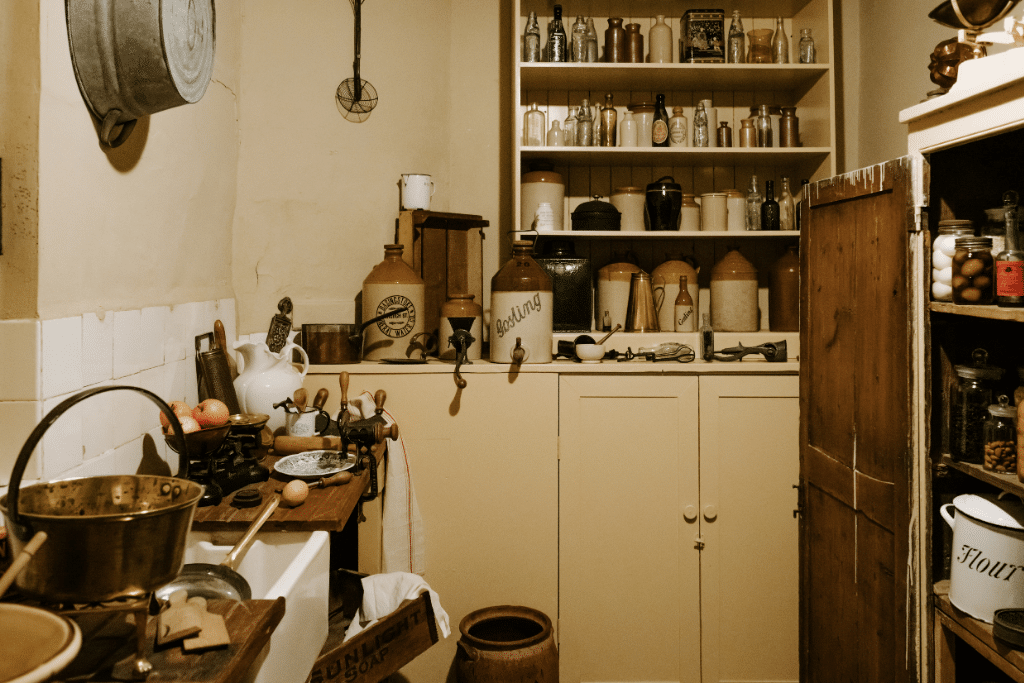
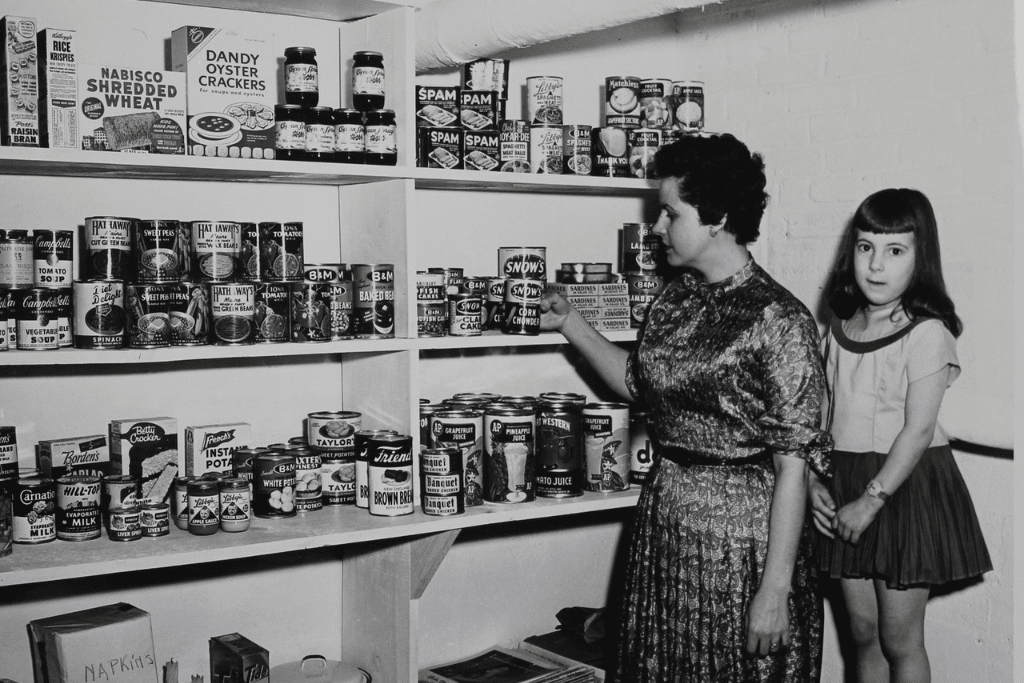 Look at that photo. Once upon a time, pantry organization was just that: all old jars and whatever box your cereal came in.These days, you have options. Pantry storage containers come in all shapes and sizes...and each has its own set of pros and cons.When it comes to basic options, many people will opt for a simple set of plastic containers, like those from Rubbermaid. As the New York Times commented, “They’re durable, tight sealing, and available in a number of convenient sizes.” For a more stylish option, some people will incorporate woven or wicker baskets, which can also help with your organization expert by allowing you to “zone” your pantry, with smaller containers collected within larger baskets. Try using a collection of cute jars in combination with your baskets to really complete the rustic aesthetic.Speaking of jars, don’t think that all jars are alike. You could choose to go with a finely designed class canister with a wood lid, like those offered by Container Store, or considered a more rectangular option with potentially more possibilities when it comes to organization.
2. How can I organize my pantry?
Pantry organization isn’t easy...but it’s worth it.A good pantry organization system is customized to your specific needs. It may take some work to get it all sorted out, but crucially the mark of a good system is actually that it reduces your work-load in the long run.The basic steps of any good pantry reorganization are fairly simple: a serious purge, a careful analysis of available space, a bit of prioritization, and finally, a zoning system. What’s more difficult, in practice, are the details: figuring how exactly to mold your space to suit your needs. Looking for more detail? We wrote up the whole process in detail here.One important thing to remember: not all pantries are alike...and neither are their owners. It’s super important to really consider how you operate before you commit to a layout that doesn’t necessarily make sense. Are you a big-time chef? Then it’s probably more important for you to make your spices extra available than it is to give the granola prime placement. The frequency of use is a huge consideration to make.3. How do I maximize small pantry space?
 Maximizing small pantry space is all about creativity. Any pantry is prone to disorder...but small spaces crank that up to 11. If you’re not careful, it’s all too easy to start simply stacking things up—and then you’re truly lost.That’s why the key to maximizing pantry space is thinking differently about you use your space. There are all manners of the way you can squeeze out a few extra feet—which can make all the difference when you’re trying to keep everything in line. Just think of the difference it makes, for example, when you add a rack to the back of the pantry door: all of a sudden you have a whole other “wall” to work with. It’s like increasing your available space by 25%.
 4. How do I start a pantry labeling system?
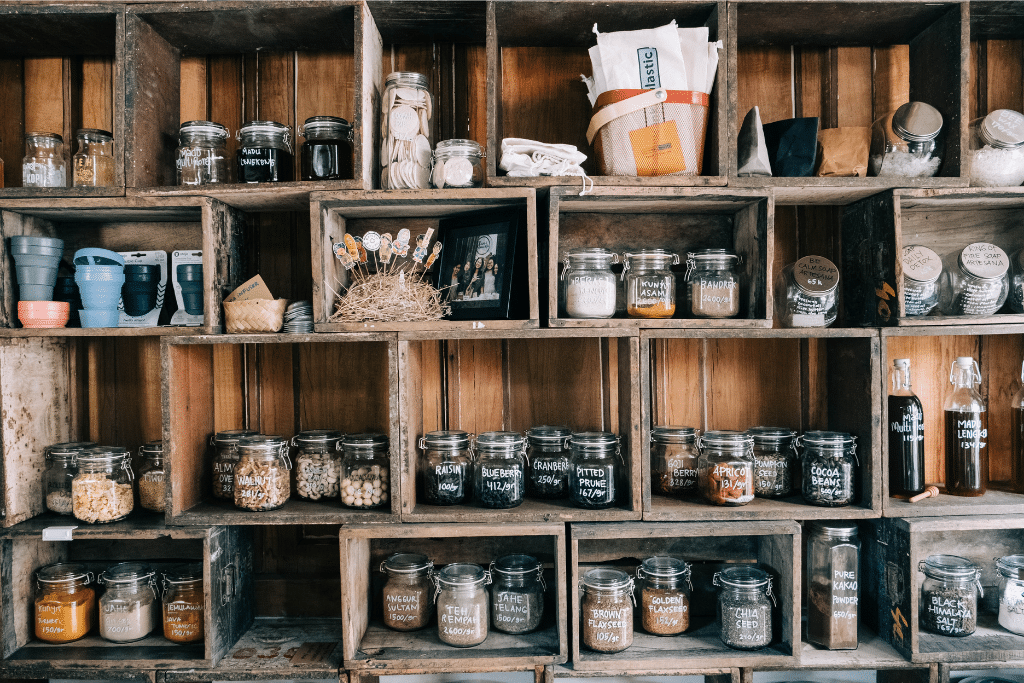 Labeling and pantries go together like America and apple pie. It’s the perfect way to keep a handle on all the variety of things that will inevitably find their way onto your shelves.The crucial thing to keep in mind before you start is the why of your labeling efforts. Sure, it’s cute and fun, and we’ve all seen it featured on blogs around the internet...but do you really need a label on your clear jar to tell that it contains cheerios (for example)?That’s not to say you shouldn’t go on a labeling binge. And in that cheerios example, there’s still plenty of value in labeling the container so you know it’s dedicated to that purpose in the future. But also consider adding more important info: like, say, expiration dates, or the day you actually packed the container. That kind of thing brings serious value.The other interesting thing to consider is some kind of color-coding. Need some help setting that up? Take a cue from The Home Edit and read through this basic primer on how exactly to do it.
5. How about custom pantry shelving to solve common questions about Pantry Storage?
If you take a look around the internet, you’ll find that plenty of companies offer pantry shelving solutions. Some make bold claims about the cost. Some brag about reliability. A very few of them might even talk about the life-changing effects their shelves and cabinets can have on your state of mind…Here’s what you won’t see: another company that makes a claim to offer all three—with decades of loyal and enthusiastic clients to back it all up.ShelfGenie is different. We don’t pretend to be anything more or less than what we are: the world’s finest makers of custom storage solutions. And that word is crucial: custom. Our solutions are built to fit the lives of the people we work for, with all the considerations of their lifestyle built into the final product. From fit to size, to materials used, we leave no consideration forgotten when building a custom shelving system.6. How much does custom pantry shelving cost?
Custom shelving, unlike something you buy off the rack, ranges considerably in price. Factors to consider include placement, material, timeline, and financing options. Luckily, our expert design team at ShelfGenie can easily give you a price estimation along with a custom design plan, all completely free of charge. Just book a call today to get started.Get Answers To All Your Pantry Storage & Shelving Questions With ShelfGenie
Our professional design experts have been solving problems of pantry storage for years—at this point, we’ve just about seen it all. Our before and after photos are often extraordinary, with customers left surprised at just how impressive the change can be. Interested in getting your own customized pantry? Click here for Shelf Genie Custom SolutionsMore Ideas and Inspiration



Explore Our Solutions
Click on a section below to explore how ShelfGenie can enhance your home.

What Our Customers Say
It’s amazing how much more room there is!
“We are loving the new storage! It’s amazing how much more room there is. I really didn’t think it would add so much more room, but it did!”Ed & Becky WSmooth as silk with low-pressure sales and creative solutions.
“It took 3 visits -- a sales and design, measure, and install to complete the installation. Every visit was on time and catered to my schedule.”Paula D.Didn’t make me feel like my kitchen should have been cleaner.
“The designer was the best! She was knowledgeable, kind, experienced, and didn’t make me feel like my kitchen should have been cleaner”Melissa L.

Schedule a free, no obligation at-home consultation.
Ready to get started? Select your preferred booking method below, and one of our talented ShelfGenie designers will come to your home and create your custom storage solution.
Your Contact Information